Practical Knowledge Creates Confidence
Working on real software and real projects shows students how things actually work. That familiarity translates into confidence when workplace challenges show up.
Why Practical Computer Training Gives You an Edge
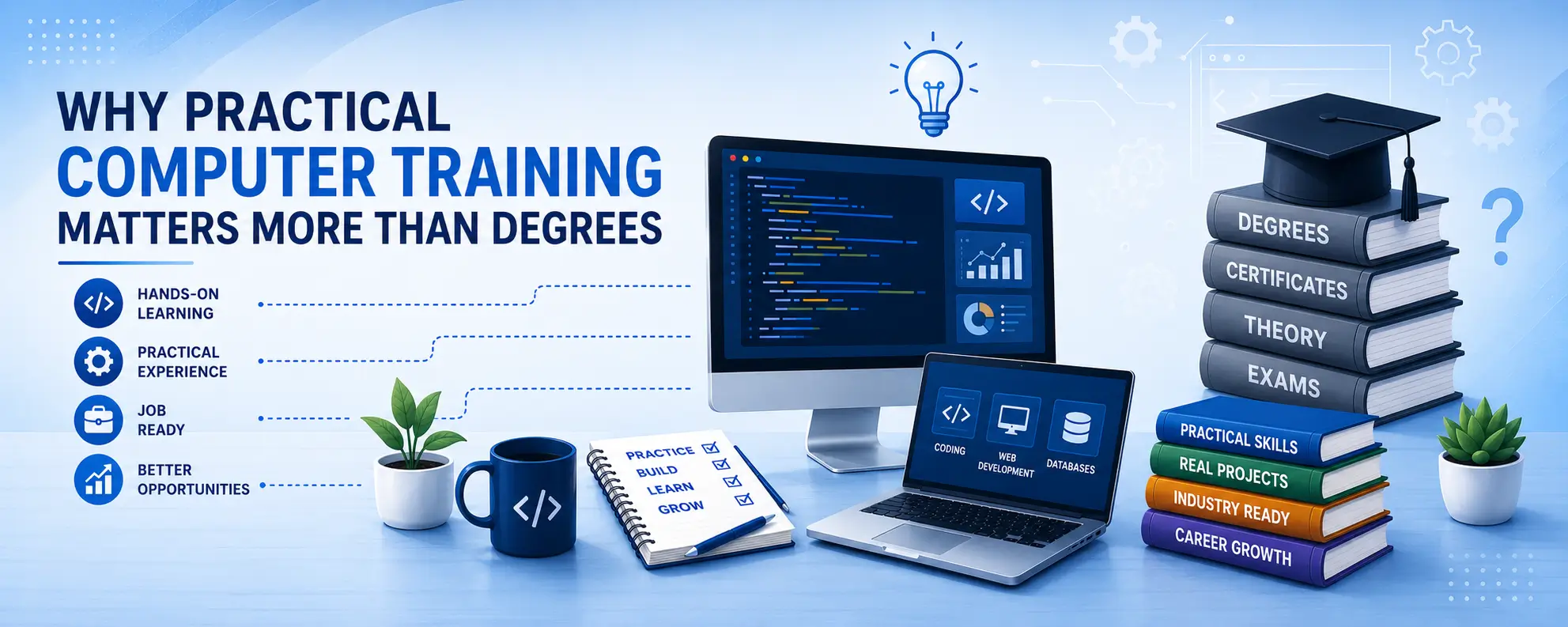
Learning by doing is still one of the fastest ways to pick up skills that stick - and it's why practical computer training gives students a real edge.
Better Job Readiness
The same business tools are used in the classroom that a company uses every day. As such, students require very little additional training when their hire date arrives.
Stronger Performance in Interviews
Many interview questions are practical, not theoretical. Candidates who've already done similar tasks answer with confidence instead of guessing.
Computer skills that improve employability - exactly what recruiters notice.
The Value of Job-Oriented Learning
Not every course prepares you for actual work. Some lean so heavily on theory that practice barely gets a mention.
Industry-Relevant Training
Job-Oriented Computer Training is built around what companies need, so students graduate with tools matching current hiring expectations.
Faster Career Growth
Employees who understand workplace systems contribute faster - and tend to climb the ladder quicker too.
Practical Skills Lead to Long-Term Success
The technology is always evolving and so should the professionals be keeping pace with it. This shows that in today’s era the learning goes on for years even after the graduation ceremony is complete.
Staying Updated With Industry Trends
Keeping one updated with latest computer software tools and other digital processes Professional Computer Training assists professionals in the job to stay updated in terms of learning latest software tools and techniques and all new digital processes.
Building Strong Technical Foundations
Continuing education in Technical skills development improves a worker’s problem-solving capacity and effectiveness and increases the potential of a professional to adapt to changes in business demands.
Avoid These Common Training Institute Mistakes
Find a path to a future career, not one to waste time.
Focusing Only on Certificates
One of the most common training institute mistakes is picking a course just for the certificate at the end. Employers care far more about what you can actually do.
Ignoring Practical Sessions
A program without practical applications in projects or assignments won't yield experience you may get from any other programs. So do remember to verify the curriculum beforehand.
Government Courses and Skill-Based Learning
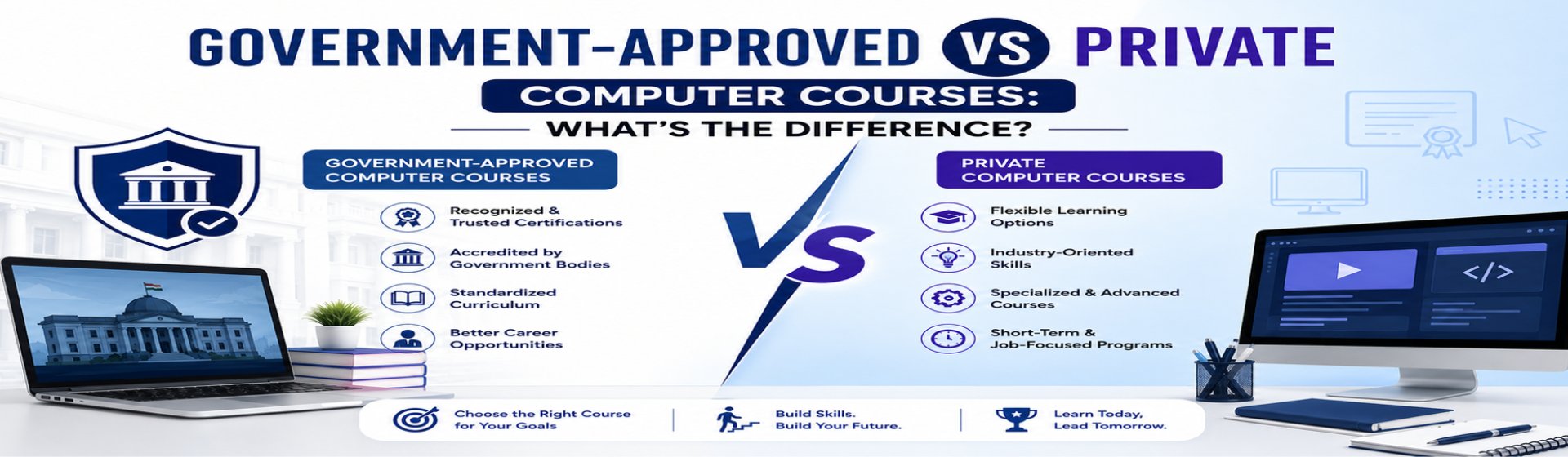
A government computer course is often a smart pick - affordable, widely recognized, and a solid foundation to build on.
The best results come when theory is backed by real practice, so look for chances to actually apply what you're learning, not just memorize it.
Career Options After School
Those interested in graduating to a job sooner might want to choose the diploma courses after 12th which are concentrated on a vocational or technical skill from the day one.
Faster Entry Into the Job Market
Due to many of these programs incorporating practical experience and hands-on training, many students will find they are work-ready much sooner.
Better Career Opportunities
That practical knowledge helps students compete more effectively for entry-level roles and internships.
The Future of Computer Education
Traditional Computer Education isn't going anywhere - it still lays the groundwork for understanding technology. Practical training is what turns that knowledge into something usable.
In today's job market employers seek outcomes, not information. And in terms of getting noticed - an educated individual who combines formal learning with practical experience gains the advantage.
Conclusion
A degree can open the door, but skills let you walk through it. That's the case for Practical Computer Training - it builds confidence, sharpens workplace skills, and improves your odds of landing a good job.
The most successful professionals aren't always the most knowledgeable - they're the ones who know how to apply what they've learned.
FAQ
1. What is Practical Computer Training?
Practical computer training “is” When teaching software skills, focus on hands-on projects and software, not just “theory” as in traditional training.
2. Why is Practical Computer Training important?
It equips the individual with work-ready skills, confidence and the skill for task management in the work environment.
3. Can practical training help me get a job?
Yes - employers prefer candidates who can contribute right away.
4. Is a degree still important for computer careers?
Yeah it sets the groundwork for it. But most of the time employers assess the practical skills in a candidate when hiring.
5. What should I look for in a computer training course?
Projects , hands on assignments , industry related tools , placement help .
6. Are diploma courses after 12th a good option?
Yes - they build professional skills and speed up entry into the workforce.