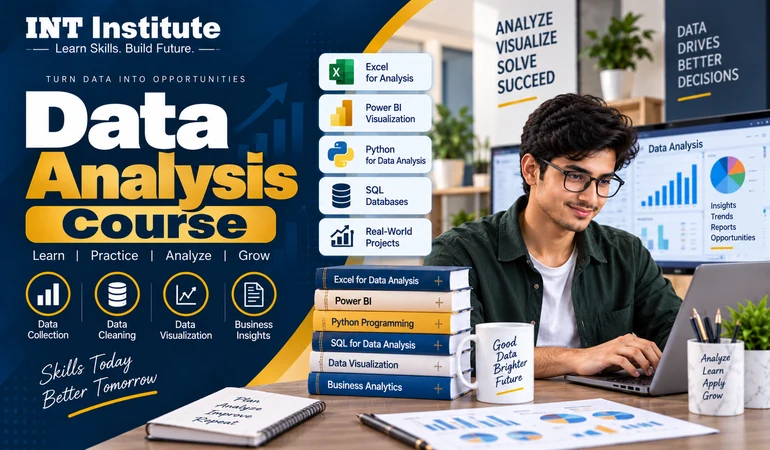
What Is a Data Analysis Course and Why Is It Important Today?
Develop practical exposure to Python and R for working with data and analytical tasks.
Learn how data can be stored, queried, and managed using MySQL and MongoDB.
Develop practical understanding of Power BI for transforming data into meaningful visual reports and dashboards.
Explore DSA, KNIME, Presto, and Predictive Modeling to understand different approaches to working with and analysing data.
Build practical retail and business skills before starting a career in the retail industry.
Develop useful knowledge for entry-level roles in stores, sales, customer service, and retail operations.
Improve selling, customer handling, product knowledge, and retail communication skills.
Understand store operations, inventory, merchandising, customer service, and daily retail activities.
Learn how customer experience, product presentation, pricing, and operations affect retail performance.
Move towards retail, sales, merchandising, customer service, or store management roles.
Build a better understanding of the systems involved in starting and managing a retail business.
Understand retail concepts that can also be applied to online selling and modern multi-channel retail.
Build foundational knowledge for exploring opportunities across retail stores, brands, sales, and customer-facing roles.
Learn Python fundamentals and its practical role in working with data and analytical tasks.
Understand R and its application in data analysis, statistical work, and analytical workflows.
Learn the fundamentals of NumPy for numerical operations and working with structured numerical data in Python.
Develop practical knowledge of relational databases, SQL queries, data retrieval, and database-based analysis.
Understand MongoDB and the fundamentals of working with document-oriented data.
Learn how to work with data in Power BI and create meaningful visual reports and dashboards.
Understand Presto as a data-querying technology and explore its role in working with data across analytical environments.
Learn the fundamentals of KNIME and understand how visual workflows can support data preparation and analysis.
Build an understanding of DSA concepts that strengthen logical thinking and problem-solving for technical data work.
Understand how different data tools can fit together across data handling, analysis, visualisation, and interpretation.
Explore the fundamentals of predictive modeling and understand how data can be used to identify patterns and make predictions.
Bring together the tools and concepts covered during the course to develop a practical understanding of data-analysis workflows.
The program brings together programming, databases, visualisation, analytical tools, and predictive modelling to provide a broad foundation in modern data analysis.
Develop hands-on skills in programming, databases, data processing, visualization, and predictive analysis to understand and work with real-world data confidently.
Work with the concepts and technologies covered in the curriculum to develop a more application-oriented understanding of data analysis.
Develop practical exposure to two important programming languages used in data-related work.
Build knowledge of MySQL and MongoDB for working with different types of data storage and retrieval systems.
Learn to transform data into visual reports and dashboards using Power BI.
Gain exposure to NumPy, Presto, and KNIME as part of a broader data-analysis toolkit.
Understand the basic concepts behind using data for predictive analysis and pattern-based insights.
Strengthen logical and problem-solving skills through Data Structures and Algorithms concepts.
Data analysis skills can be applied across technology, business, finance, operations, marketing, reporting, and other data-driven environments. Your career opportunities will depend on your practical skills, experience, portfolio, and specialization.
Work with data to identify patterns, prepare analysis, and communicate useful insights.
Use data and visualisation tools to support reporting and business decision-making.
Create reports, dashboards, and visual data presentations using Power BI.
Work with databases, spreadsheets, reports, and analytical information to support organisational requirements.
Build an entry-level foundation through programming, database, visualisation, and analytical skills.
With additional experience and specialization, progress towards broader data analytics responsibilities across different industries.
Complete the 8-month Data Analysis Course through structured online or offline learning designed around modern data-analysis technologies.The program covers Python, R, NumPy, MySQL, Power BI, Presto, MongoDB, KNIME, DSA, and Predictive Modeling through a focused data-analysis curriculum.Build practical exposure to multiple data tools and analytical concepts through structured learning, with the course fee currently listed at ₹40,000.
Limited Seats
Practical data analysis and technology-focused learning
Python, R, MySQL, Power BI and other modern data tools
Predictive Modeling and analytical concepts
Study material and learning resources
Doubt clearing and mentor guidance
Hands-on Data Processing and Visualization Practice
Real-World Data Analysis Projects
Data Analysis Learner
""The course gave me exposure to multiple data technologies instead of focusing on only one tool. The combination of Python, SQL and Power BI was particularly useful.""
Data Analytics Learner
""Learning different tools in a structured sequence helped me understand how programming, databases and visualisation connect in data analysis.""
Data Analysis Student
""The curriculum gave me a broader understanding of data analysis and helped me explore areas like Power BI, Python and Predictive Modeling.""
Find answers to the most common questions about our course.
Data analysis is not about learning a single software or programming language. It involves understanding data, working with different tools, finding meaningful patterns, creating useful visualisations, and communicating insights clearly. Build a broader foundation in modern data analysis with the Data Analysis Course at INT Institute and gain practical exposure to Python, R, databases, Power BI, analytical tools, and Predictive Modeling.
Need help?
Our team is ready to assist you.