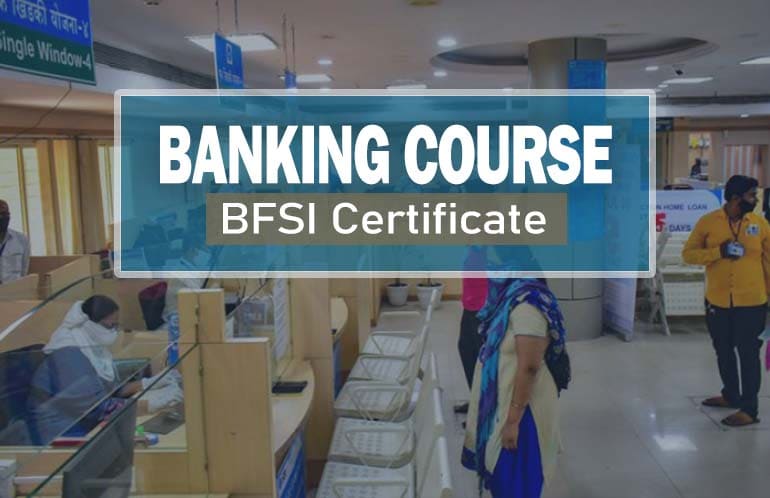
Banking Course – Build a Secure, Respected, and Future-Proof Career in the Banking Sector
EMI Available
6 Days a Week
100% Placement Assistance
Experience Teacher
In an age of rapid change, where many career options feel uncertain or short-lived, banking continues to stand out as a symbol of stability, respect, and long-term security. Parents often look for careers that offer dignity, consistent income, and growth. Students look for opportunities that provide confidence, clear direction, and professional identity. A well-structured Banking Course bridges this gap perfectly. It prepares learners not just for exams or interviews, but for real-world banking roles that demand knowledge, discipline, and responsibility. With the expansion of public and private banks, financial institutions, digital banking services, and customer-centric operations, trained banking professionals are in constant demand. Choosing the right banking course today can shape a learner’s future for decades to come.
Course Details
-
Duration : 3 Months
-
Course level : Expert
-
Language : English, Hindi
-
Course Status : Onsite
-
Regular Price : ₹15,000.00
-
Discount Price : ₹3,000.00
-
Final Amount : ₹12,000.00
-
Certificate : Yes
Student's Testimonial's
-
Int institute is the best institute. I'm learning e accounting and banking course from here. Teachers are very nice. Each topic is explained in a nice way which helps us to understand easily. Thanks Int institute!!
-
I completed my advanced diploma in banking and finance. I have learnt so many skills. Its best institute for banking and finance courses.
-
Best place for learing computer courses wide range of government approved courses thanks Int computer institute for helping and guide me ...
-
INT institute is one of the best top level institute in sonipat related to various computer courses with very cooperated and experienced staff ..thank you .INT Institute for built my knowledge and specially thanks to sarvesh sir.:-)
What Is a Banking Course and Why Is It Important Today?
A Banking Course is a career-oriented training program that focuses on the fundamentals and operations of the banking and financial services sector. It equips learners with the knowledge and practical understanding required to work confidently in banks, financial institutions, and related organisations.
Why a banking course matters in today’s world:
- Banking jobs offer long-term career stability
- Financial literacy is essential in a digital economy
- Banks require trained professionals, not just graduates
- The sector offers growth, respect, and job security
Unlike general education, a banking course is job-focused and skill-driven, making learners industry-ready.
Detailed Course Overview
The Banking Course is designed to balance theory, practical knowledge, and professional readiness.
Course Overview:
- Course Level: Beginner to Intermediate (structured learning)
- Mode of Learning: Classroom-based with practical discussions
- Duration: Designed for strong conceptual clarity
- Medium of Instruction: Simple, clear English
- Certification: Professional course completion certificate
The course focuses on building banking awareness, operational knowledge, and confidence needed in real banking environments.
Who Should Join This Banking Course?
This course is suitable for learners from diverse educational backgrounds.
Ideal for:
- Students planning a career in banking or finance
- Graduates preparing for bank-related roles
- Job seekers aiming for stable and respected careers
- Beginners with an interest in finance and banking
- Parents seeking a safe and reliable career option for their children
No prior banking experience is required. Concepts are explained from the basics, making it accessible and stress-free.
Key Benefits of Enrolling in a Banking Course
Choosing a banking course is a strategic career decision.
Major benefits include:
- Clear understanding of banking systems and operations
- Improved employability in public and private banks
- Professional confidence in financial environments
- Skills applicable across multiple financial institutions
- Long-term career growth and stability
This course prepares learners not just to get a job, but to perform effectively and grow.
Skills and Curriculum Overview
The curriculum is designed to reflect real banking operations and responsibilities.
Core Banking Knowledge:
- Introduction to the banking system
- Types of banks and financial institutions
- Roles and responsibilities in banks
Banking Operations:
- Account opening and customer handling
- Deposits, loans, and advances
- Cheque clearing and payment systems
- Basic understanding of banking documents
Financial Awareness:
- Basics of financial products and services
- Understanding interest, credit, and risk
- Customer service and ethical banking practices
Professional Skills:
- Communication and customer interaction
- Accuracy, responsibility, and discipline
- Understanding compliance and procedures
The focus remains on practical understanding, not just textbook knowledge.
Government and Private Sector Relevance
A Banking Course offers strong relevance in both government and private sectors.
Government sector relevance:
- Public sector banks
- Cooperative banks
- Government financial institutions
- Banking-related administrative roles
Private sector relevance:
- Private banks and NBFCs
- Financial service companies
- Customer service and operations roles
- Corporate banking support positions
Banking skills are valued because they require trust, accountability, and professionalism.
Career Opportunities and Growth Potential
Completing a Banking Course opens multiple career pathways.
Entry-level roles include:
- Bank Clerk / Assistant
- Customer Service Executive
- Banking Operations Executive
- Relationship Officer
Long-term growth opportunities:
- Officer-level positions
- Branch operations and management roles
- Specialisation in loans, credit, or compliance
- Leadership roles with experience and performance
Banking careers are known for steady promotions and structured growth paths.
Long-Term Value and Career Security
One of the strongest reasons parents and students choose banking is its reliability.
Long-term value of a banking course:
- Stable income and job security
- Respect and social recognition
- Opportunities for growth within organisations
- Skills that remain relevant for decades
In uncertain economic times, banking remains one of the most trusted career choices.
Learning Environment and Teaching Approach
A supportive learning environment plays a major role in understanding banking concepts.
The teaching approach includes:
- Simple explanations with real-life examples
- Case studies and practical discussions
- Focus on clarity and confidence building
- Regular interaction and doubt resolution
The aim is to help learners think like banking professionals, not just memorise terms.
Certification Value and Professional Credibility
Certification adds structure and credibility to learning.
Why certification matters:
- Demonstrates formal training in banking
- Strengthens resumes and job applications
- Builds confidence during interviews
- Shows commitment to a professional career path
A recognised certificate reassures parents and employers about the learner’s seriousness and preparedness.
Why Choose This Banking Course Over Others?
Not all banking-related courses deliver real understanding.
What makes this course different:
- Practical and career-oriented curriculum
- Beginner-friendly teaching approach
- Focus on real banking operations
- Balanced attention to knowledge and professionalism
This course is designed for learners who want clarity, confidence, and long-term value.
Final Thoughts:
A Banking Course is more than just professional training—it is an entry into a respected and stable career path.
For students, it offers direction, confidence, and opportunity.
For parents, it provides assurance, security, and peace of mind.
In a world full of career uncertainty, banking continues to stand strong as a field built on trust, responsibility, and growth. Choosing the right banking course today can shape a successful and secure tomorrow.
Take the Next Step
📍 INT Computer Institute
📞 Visit or call for course counselling
🔢 Begin your learning journey
✨ Build understanding from the basics
Take a confident step toward a respected banking career and invest in a future that values skill, stability, and trust.
FAQ Section
-
Yes! Most public sector banks like SBI and PNB recruit through IBPS. Job roles include clerk, PO, or other specialist officer roles in public and private sector banks. The course provides preparatory training for competitive exams in banking roles.
-
You can choose from career options as a banking officer, financial advisor, loan officer, or customer relationship manager. You can work in a particular field, such as investment banking or fintech.
-
You’ll take coursework on banking operations, financial products, customer service, loan processing, risk management, and digital banking tools, including core banking systems and fintech applications.
-
Fresher bank clerks or POs in public sector banks earn ₹3–6 LPA. Private bank jobs offer roles that earn ₹4–8 LPA, and a senior role such as a branch manager would offer annual salaries of ₹12–20 LPA.
-
You can apply for a bank clerk, probationary officer (PO), customer service executive, or branch operations manager in private and public sector banks.
Course Curriculum
No Curriculum Found!
Request a Demo Class
Fill in Your DetailsMore inquery about course